Showing posts with label certified copy. Show all posts

Tuesday, April 17, 2012

Between the Pitches: Why Film Critics Love Baseball

            Last night, I attended my first baseball game of the season, which was an excellent night as the Minnesota Twins tore through the New York Yankees for a 7-3 win (as a MN native living in New York, it’s fun to see your team take down a massively overpaid one). The weather was perfect, I had great seats, and the game was well fought by both sides.

            And then I got thinking. Many of my friends hate watching baseball (many of them hate sports in general, but let’s ignore those for now). They prefer football, basketball, and hockey, claiming baseball is slow, boring, and uneventful. Then I was thinking how many film critics I know are also huge baseball fans: Noel Murray (Atlanta Braves), Matt Singer (New York Mets), Louis Godfrey (San Francisco Giants), and Richard Brody (another Mets fan—Richard told me he went to the second game ever at Shea Stadium) to name a few. These guys are also film critics who appreciate what some call “slow cinema.” I’m thinking films out of the Romanian New Wave, or the works of Bela Tarr, or Jeanne Dielman. And to name some of their favorite releases, we’ve loved films like Poetry, The Tree of Life, Meek’s Cutoff, and We Can’t Go Home Again. And this made me realize that many of the pleasures of watching these films are the same to why I love baseball.

Thursday, January 26, 2012

VIDEO ESSAY — The Double Life of James and Juliette: Mysteries and Perceptions in Kiarostami's Certified Copy


Inspired by the recent wave of video criticism that has taken over blogs like Fandor and Press Play (both essential reading/viewing), I decided to try my own hand in writing, editing, and producing a video essay myself. The first, presented above, tackles my favorite film of 2011, Abbas Kiarostami’s Certified Copy. I hope you enjoy this, as I had a great time making the essay, and hope to do more throughout 2012. Any comments or feedback would be greatly appreciated, either in the comments below or by email.

Monday, January 23, 2012

My Oscar Ballot: 2012 Edition

Certified Copy
While everyone gets hyped up about tomorrow morning’s Academy Award nominations, I could probably be less interested this year. While Oscar pundits get excited over some of the middling films that will populate the lists tomorrow, I’m hoping that some years down the roads, the films that dominate my own top films list will become cherished classics. For fun, I’ve submitted my own ballot, following the style of the Academy Awards (ten films ranked for Best Picture, five nominations for all other categories). I’ve presented it without comment—again, go to my top 15 list for commentary on most of these picks.

Best Picture
1.      Certified Copy
2.      Martha Marcy May Marlene
3.      A Separation
4.      Meek’s Cutoff
5.      The Interrupters
6.      Margaret
7.      Mysteries of Lisbon
8.      Take Shelter
9.      Tuesday, After Christmas
10.    The Tree of Life

Best Director
·         Sean Durkin, Martha Marcy May Marlene
·         Asghar Farhadi, A Separation
·         Abba Kiraostami, Certified Copy
·         Kelly Reichardt, Meek’s Cutoff
·         Raúl Ruiz, Mysteries of Lisbon

Best Actor
·         Woody Harrelson, Rampart
·         Gary Oldman, Tinker Tailor Soldier Spy
·         Brad Pitt, Moneyball
·         Peyman Moaadi, A Separation
·         Michael Shannon, Take Shelter

Best Actress
·         Juliette Binoche, Certified Copy
·         Kirstin Dunst, Melancholia
·         Elizabeth Olson, Martha Marcy May Marlene
·         Anna Paquin, Margaret
·         Kristin Wiig, Bridesmaids

Monday, January 02, 2012

This Is The End: The Best Films of 2011


            In probably the pitch-perfect cinematic moment of the 2011, Curtis, the tall and constantly in-check protagonist of Take Shelter, watches lighting dance across the sky while his wife and daughter sleep in the back of the car. “Is anyone else seeing this?” he exclaims. If this is the end, we need to know we’re not the only ones out there realizing the world is about the change.

            Which is perhaps what all these apocalyptic films—Margin Call (fiscal), Contagion (viral), Rise of the Planet of the Apes (special), and Melancholia (literal)—are all about. Even if we’re prepared to face the end, we can’t do it alone. We need to be sure of who we are and understand ourselves, which is why so many films not specifically about the end are about the minor apocalypses within our lives. The strange protagonist of Pedro Almodovar’s The Skin I Live In must come to terms with a completely new identity. Werner Herzog explored both the birth of spiritual life (Cave of Forgotten Dreams) and the end of an actual life (Into the Abyss). Attack the Block gave us teenagers who must redeem themselves and their way of life by defeating forces greater than our world. And so many films explored the state of the family and the trials and often failure resulting in those who cannot manage it: A Separation, The Descendants, Take Shelter, Margaret. Apocalypse isn’t about the end of the world, as the idiotic villain (Michael Nyqvist) from Mission Impossible — Ghost Protocol lectures. It’s about what comes after, which is why so many films have focused on our uncertainty to face something new.

            It was also a ridiculously excellent year for film, easily the best since I started writing in 2004. Perhaps not in the Hollywood sphere, where mainstream cinema continues to lead down a series of franchise reboots and post-3D conversions, as much as in the independent and world cinema. This year was simply impossible to narrow down to the best films of the year, and deciding where to stop (20? 25? 40?) made the usual business of top 10s even harder. I decided on 15 films, and any of the top six or seven would have probably been my #1 film last year, showing the quality of excellent cinema today, as long as you know where to find it.

Tuesday, July 12, 2011

Best of the Year So Far: Big Splashes in the CInematic Pool

Bridesmaids
2011 has already set itself apart from last year with a number of truly unqualified gems of the cinematic order. The medium continues to develop new voices that speak to us in fresh and original ways, and a number of masters have been able to find new takes to stretch the imagination as well. Here are ten favorites, presented in alphabetical order, so far (click on the title to read the full review):

The Arbor (United Kingdom): Clio Barnard’s strange experiment in documentary filmmaking follows the sad story of playwright Andrea Dunbar and the children who begot her sins. But more fascinating is Ms. Barnard’s unique style that only brings the voice in, allowing her to run wild with the visuals, truly accentuating the story in powerful ways.

Bridesmaids (United States): While suffering from some of the minor issues that all Judd Apatow films seem to carry, Bridesmaids is certainly the funniest movie of the year so far, with Kristin Wiig giving it all in a raunchy gross-out comedy with truly realized characters and a unique perspective on female friendship.

Certified Copy (France and Italy): Abbas Kiarostami’s first feature outside his native Iran asks a simple question: Why do we value the original, when the copy can be just as good? And thus Juliette Binoche and William Shimmel play a game across one afternoon that tests this premise, leading us in an insightful drama where the emotional stakes are equaled by the philosophical stakes.

Friday, March 11, 2011

Certified Copy: Lovers' Game Creates a Platonic Paradox

Certified Copy
Written and Directed By: Abbas Kiarostami
Starring: Juliette Binoche and WIlliam Shimell
Director of Photography: Luca Bigazzi, Editor: Bahman Kiarosami
Rated: Not Rated, but a tame movie with only a few moments of language

            When the Iranian director Abbas Kiarostami last appeared in US cinema screens, his film had about five camera set ups, one location, and mixed somewhere between reality and drama, all which made Ten one of the most brilliant films of the previous decade (He had a few other features and shorts, none which received much attention). Now we have Certified Copy, which stars Juliette Binchoe, is shot in one of the most gorgeous areas of Italy, and Mr. Kiarostami’s camera seems to have a much freer rein around the ara. Has he finally caved in?

            Hardly, or not even a bit. Instead, Mr. Kiarostamihas made something extremely risky and very unique, a mystery film with his strongest narrative to date. Certified Copy is full of gripping emotion, yet at the same time, philosophical ideas as well, giving us lingering questions and shots that can be debated for months. The director may be working outside his home country, but we are really in his playground. Certified Copy is an exploration of perspective more than anything: whose do we see? What are we paying attention to? And does it matter what it represents in the end?

Thursday, September 30, 2010

NYFF Review: Certified Copy

Certified Copy
Directed By Abbas Kiarostami
France/Italy

            When the Iranian director Abbas Kiarostami last appeared at the New York Film Festival, his film had about five camera set ups, one location, and mixed somewhere between reality and drama, all which made Ten one of the most brilliant films of the decade. Now we have Certified Copy, which stars Juliette Binchoe, is shot in one of the most gorgeous areas in Italy, and Mr. Kiarostami moves all and around it. Has he finally caved in?
            Hardly, or not even a bit, though he has made something extremely risky and very unique, a mystery film with his strongest narrative to date and full of gripping emotion, yet at the same time, full of philosophical ideas, lingering questions, and shots that can be debated for months. Mr. Kiarostami may be working outside his home country, but we are really in his playground. Certified Copy is an exploration of perspective more than anything: who’s do we see? What are we paying attention to? And does it matter what it represents in the end?
            The film is a sort of a bait and switch; it begins at a lecture in Tuscany, where James Miller, played by British opera singer William Shimell, talks about his book on the nature of copies of precious works of art. In the audience is Elle (Ms. Binoche), who doesn’t seem to listen to his words, but seems to set up a date with him, despite protests by her son. The two take off to a small town in outer Tuscany, where they begin talking about his book, the nature of being smart, and other small things.
            And then the film becomes something different. The two stop playing “getting-to-know-you” and start acting like something else. Or are they acting? And thus Mr. Kiarostami, not one to ever play straight as us, gives us a mystery wrapped in a romantic drama, and keeps us on our heels the entire time. We want to fall into the drama, but he pulls us out every so often. We wonder why we are following these two people, yet listen to their every word.
            Of course, it’s hard not to deny the power of the film when Ms. Binoche and Mr. Shimell are spectacular at their roles. They go through every emotion: excited, happy, curious, angry, frustrated, morose, longing, dire, and more. They keep us invested in a film that I’m not sure Mr. Kiarostami wants us to be invested on in a basic level, as he seems to be aiming for something higher and grander. Ms. Binoche, as always, particularly takes off. When James gives a speech about seeing a mother and child at the statue of David, Ms. Binoche lets out a single tear, that literally launches the entire film from there. Is it a recollection, or a memory? Mr. Kiarostami doesn’t allow us to truly know, but I’m not sure the film would retain its power if it does.
            The beauty of the actors is often put through Mr. Kiarostami’s most scrutinizing directorial vision he’s created. While he is flexible with his camera, he often puts Ms. Binoche front and center, staring right at us, while Mr. Shimmel stares just off to the side. Is she waving at us, telling us we’re being conned? Or is it something real, and should we care?
            In the end, Mr. Kiarostami is asking us to look at the perspectives we bring not only to our vision of art, but to our vision of life. Early in the film, Elle takes David to a small museum that proudly shows off a forged copy of a part of a Roman temple, just because it is as beautiful as the original. In one way, we may scoff at the idea, but Certified Copy is all about what we are seeing when we look. Do we see a woman living a fantasy, or a wife for fifteen years? Do we play along with our stories, or do we recreate ourselves for an illusion that can feel just as real? Mr. Kiarostami, always wanting to play with the illusion of cinema, will always look through the camera and imagine that the whole world is inside that frame, as long as he can.

Tuesday, August 03, 2010

NYFF Predictions: Hollywood Vs. Cannes

Helen Mirren in The Tempest

With the announcement only about a week away, its time for some educated guesswork on what will be at this year’s New York Film Festival. Richard Pena and crew have already made two off-key announcements: the festival will open with David Fincher’s The Social Network (aka “The Facebook Movie”) and the centerpiece selection will be Julie Taymour’s The Tempest, which has an all star cast led by Helen Mirren in the title, now gender-bending role.
            The two choices make for interesting news because NYFF has been known to stick away from big stars in favor of international and more obscure pictures, but this caused a series of backlashes last year. Both The Social Network and The Tempest seem to show either outside pressure on the committee or the committee itself, which has now added ex-Vareity film critic Todd McCarthy, has decided to stick more mainstream. The decision also might be effected by the lack of Cannes films desired. This festival was not well received, and although certain films will sure make the NYFF cut, I’m sure the lack of dynamic films has caused the committee to search toward Hollywood films. As always, there are sure to be a handful of Asian and Latin American autuers as well.

So below are my picks for what we will probably see next week:

For Sure In

Certified Copy, Abbas Kiarostami: Kiarostami is beloved by NYFF and his most mainstream picture to date, at least due to the fact that the film is in English and stars Juliette Binoche, should make it an easy contender.

Uncle Boonmee Who Can Recall His Past Lives, Apichatpong Weerasethakul: Like Kiarostami, the Thai director better know as “Joe” is a staple at the festival, and NYFF has had the Palm D’Or winner at the festival for as long as I can remember.
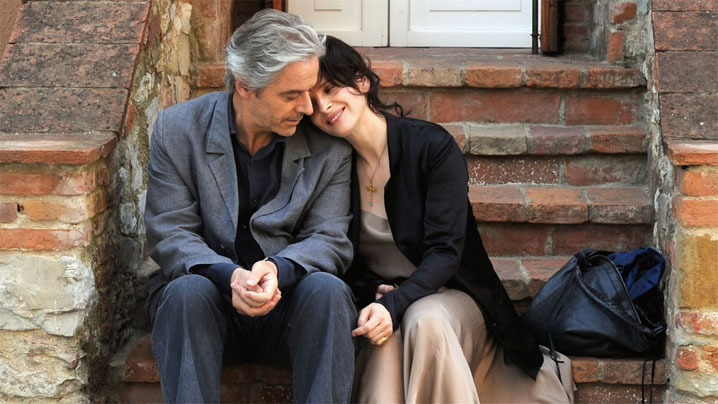
Juliette Binoche in Certified Copy

Film Socialisme, Jean-Luc Godard: If the committee does include a bunch of America star studded pictures, I could see the backhand coming with Jean-Luc Godard’s latest film, which exploded at Cannes like no other due to its simply confounding nature. In fact, I wouldn’t be surprised if Film Socialisme is featured with other classic Godard films to highlight his 50 years in cinema.

Carlos, Olivier Assayas: NYFF is never afraid of epics; Che played two years ago, and all three parts of the Red Riding trilogy last year. Add to the fact that Olivier Assayas is a stape at the festival, and the film is much more accessible than his past films, and you’ve got a guaranteed entry.

Another Year, Mike Leigh: The British auteur is another NYFF favorite, though I could see this one being skipped over for something either less obscure, or perhaps more obscure. Most likely the committee will invite him for another run at the fest.

Likely

Poetry, Lee Chang-dong: This Korean film won best screenplay at Cannes this year, and although it did divide some critics, Lee is the kind of auteur that the committee revels behind. It seems like the kind of film a critic like Scott Foundas would champion.

The Housemaid
Housemaid, Im Sang-Soo: Richard Pena is a huge fan of Kim Ki-young’s original 1960 film, as well as Korean cinema in general, so I have a feeling he will try and push this onto the committee.

The Strange Case of Angelica, Manoel de OliveiraL Now at 101 years old, NYFF always seems to crave the latest film by the world’s oldest director.


Blue Valentine, Derek Cianfrance: This very well received indie-film starring Michelle Williams and Ryan Gosling could make its way to Lincoln Center. I could see this being the equivalent to Precious last year where it’s the film’s performers that influence the committee.

Meek’s Cutoff, Kelly Reichardt: Richard Pena has championed Ms. Reichardt’s last two films, especially Wendy and Lucy, which is why her latest indie-drama, again with Michelle Williams, should make the cut.

Reaches

Miral, Julian Schnabel: Mr. Schnabel might have made it with his last film, The Diving Bell and the Butterfly, but Miral, which stars Freida Pinto as a Palestinian woman, might be either too mainstream or too political to attract the same attention this time.

The Illusionist, Sylvain Chome: NYFF 2007 closed with the animated film Persepolis and I see no problem in bringing Sylvian Chome’s follow-up to The Triplets of Belville, which features a lost screenplay by Jacques Tati.

Terrence Malick's The Tree of Life
Black Swan, Darren Aronofsky: If there is another American auteur that NYFF has championed, it is the director of The Wrestler (NYFF 08 Closer) and The Fountain. His new film, a thriller set in the world of New York ballet, might be the kind of dark yet mainstream picture NYFF is hoping to add this year.

Start Praying Now

The Tree of Life, Terrence Malick: Malick’s fifth film, which deals with the beginning of time as well as a family drama starring Brad Pitt and Sean Penn, has skipped over Cannes, and then Toronto and Venice. I’m sure NYFF would love the attention, but chances are slim on this very special film that Malick will refused to be rushed on.